
Celebrity-Inspired Rhinoplasty
How Surgeons Read Reference Photos Without Copying a Celebrity’s Nose
By Dr. Jinwook Jeong, Board-Certified Plastic Surgeon
DL Plastic Surgery, Seoul

Clinical consultation at DL Plastic Surgery — facial proportions and structural anatomy should guide rhinoplasty planning.
English editorial adaptation with SEO, GEO, AEO, image metadata, and publishing schema
How to Use Celebrity Nose Photos in a Rhinoplasty Consultation
A celebrity photograph can clarify aesthetic preferences, but it cannot serve as an exact surgical template. The same nasal shape can create a very different impression depending on forehead height, midface length, lip projection, chin position, facial proportions, and skin thickness.
During rhinoplasty consultations, patients often say, “I want a nose like this celebrity’s.” The request is understandable, but directly copying another person’s nose is neither realistic nor necessarily desirable. The better question is not whether the bridge is high or the tip is attractive in isolation, but how the nose contributes to the balance of the entire face.
Reference images help define preferences: a high or low radix, a straight or gently curved bridge, a sharper or softer tip, and a subtle or more dimensional overall impression. This article compares visual characteristics observed in public frontal, three-quarter, and profile photographs. It does not rank appearances, diagnose anatomy, or suggest that any person discussed has undergone cosmetic surgery.
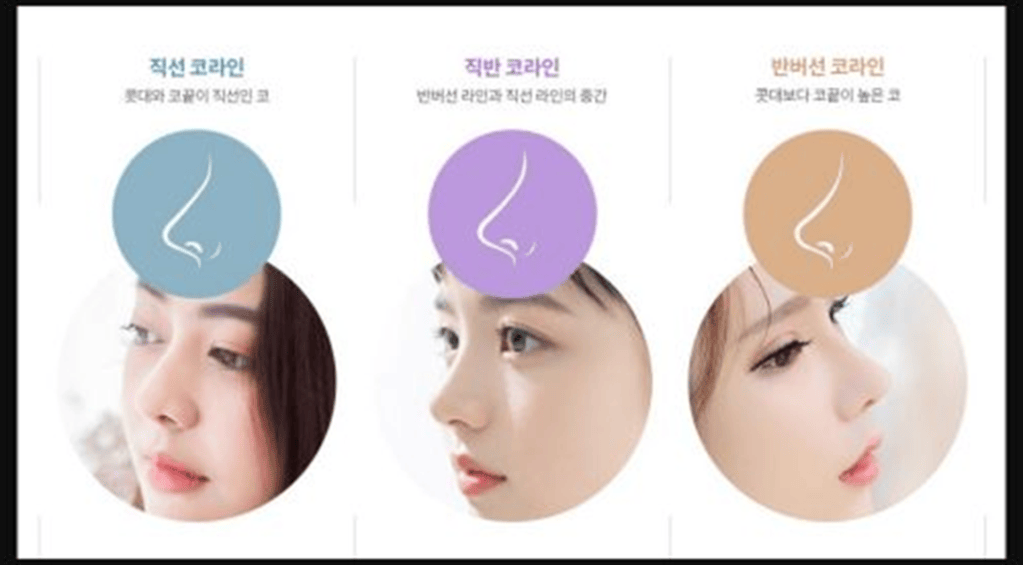
Visual reference categories — bridge curvature, starting point, and tip definition can communicate different aesthetic goals.
Four Aesthetic Directions Patients Commonly Describe
| Direction | Public-photo references | Key visual impression |
| Soft and natural | Suzy, Chae Soo-bin, Minji | Gentle bridge-to-tip transitions and a tip that does not appear overly sharp. |
| Low radix, defined tip | Cho Yi-hyun | Dimension created at the tip while preserving a lower, softer starting point. |
| Straight and refined | Shin Se-kyung, Kim Ji-won | A clean dorsal line with restrained tip rotation and profile balance. |
| Defined and dimensional | Go Youn-jung, Han Ga-in, Jang Wonyoung, Karina | Clear dorsal aesthetic lines and tip definition in frontal and three-quarter views. |
Soft and Natural: Suzy, Chae Soo-bin, and Minji
These references illustrate noses that blend into the face without making the tip appear excessively narrow or sharp. Suzy shows a soft bridge-to-tip transition, Chae Soo-bin a gradual flow from the radix to the tip, and Minji a natural-looking tip that is not strongly pinched. This direction may appeal to patients seeking a youthful and approachable impression.
A Low Radix with a Defined Tip: Cho Yi-hyun
Cho Yi-hyun’s public photographs illustrate how central facial dimension can be created without beginning the bridge high between the eyebrows. For a smaller face, closely positioned eyes, or a naturally low radix, tip position and frontal definition may matter more than raising the entire bridge.
A Straight and Refined Profile: Shin Se-kyung and Kim Ji-won
Their public profiles are useful references for patients who prefer a smooth, linear bridge, restrained tip rotation, and balance extending from the forehead to the chin rather than a dramatic curve.
Defined and Dimensional: Go Youn-jung, Han Ga-in, Jang Wonyoung, and Karina
These references show comparatively distinct dorsal aesthetic lines and tip points in frontal and three-quarter views. Even when greater definition is desired, excessively raising the radix or narrowing the tip can make the nose dominate the face. Definition must remain proportionate to the patient’s anatomy.
Frontal View: Alar Width and Dorsal Aesthetic Lines
The frontal view helps assess dorsal width, tip shape, alar width, and whether the nose appears centered within the face. Across these public photographs, the alar base generally does not look excessively wide or outwardly flared, although each person’s frontal impression remains distinct.
Go Youn-jung: Definition That Increases Toward the Tip

Go Youn-jung — a public-photo reference for frontal tip dimension and dorsal aesthetic lines.

Go Youn-jung — three-quarter reference view showing the bridge-to-tip transition.
Her dorsal aesthetic lines appear to become more noticeable as they approach the tip, maintaining visible dimension without appearing extremely narrow or sharp.
Shin Se-kyung: A Straight and Composed Line
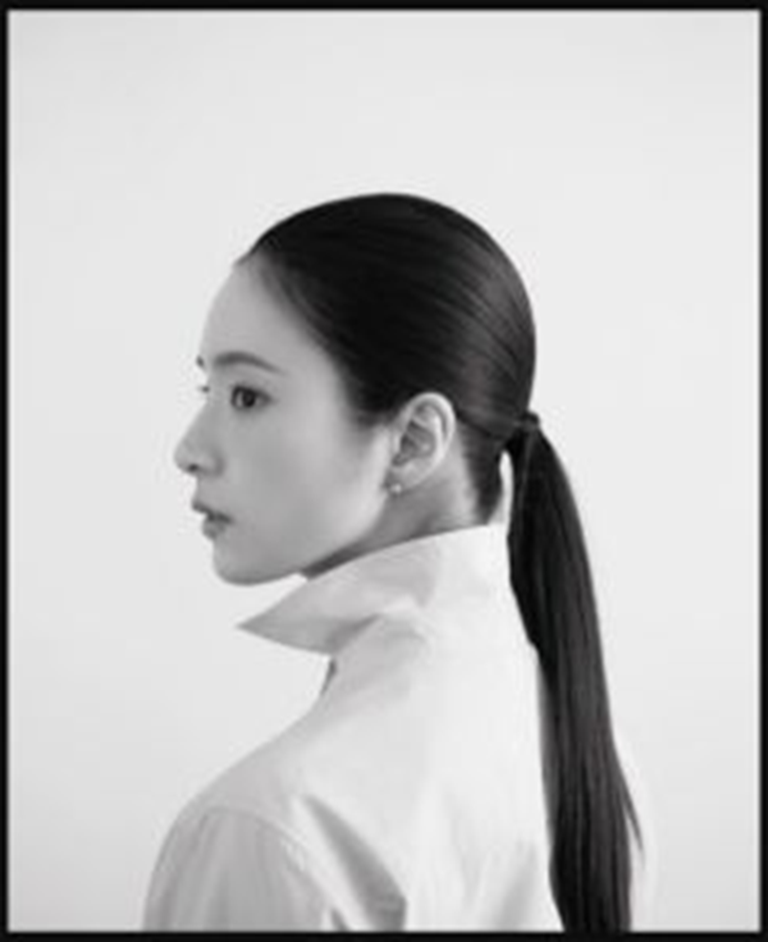
Shin Se-kyung — profile reference for a straight dorsal line and balanced chin support.

Shin Se-kyung — public-photo reference for a calm, refined frontal impression.
The bridge appears relatively straight, with limited variation in width. Rather than emphasizing the nose alone, the shape reads as part of the longer facial outline and chin.
Cho Yi-hyun: A Soft Starting Point with a Clear Tip

Cho Yi-hyun — a reference for natural tip definition from an oblique angle.

Cho Yi-hyun — a low, soft radix paired with visible tip definition.
A comparatively low and soft radix contrasts with a clearer tip point. This is a useful reference when the patient wants dimension at the tip without substantially increasing glabellar height.
Han Ga-in, Karina, and Jang Wonyoung: Defined Frontal Points

Han Ga-in — profile reference for a straight bridge and defined central tip point.

Karina — public-photo reference for a slim frontal line and distinct tip definition.

Jang Wonyoung — public-photo reference for a slim bridge and a clearly expressed tip.
These appearances should not be reduced to the goal of creating a “thin nose.” The appropriate degree of definition depends on skin thickness, cartilage strength, alar width, and the proportions of the patient’s face.
Three-Quarter View: Tip Facets and the Alar Contour
The three-quarter view often reveals the relationship between the tip and alar rim most clearly. It allows the surgeon to examine whether the tip facets remain balanced, whether the scroll line between the tip and alar cartilage appears smooth, and whether light flows continuously from the supratip area to the tip.
A tip that is not strongly projected may produce a softer and younger impression. A clearer point of definition can create dimension in a smaller face. The important distinction is whether the patient wants more projection, a clearer frontal point, increased three-quarter definition, or greater rotation.

Minji — a reference for a softly defined nasal tip and youthful overall impression.

Chae Soo-bin — oblique reference views showing a gentle tip-to-columella transition.
Profile View: The Radix, Bridge, Lips, and Chin
A well-proportioned profile depends on more than bridge height. The visual flow from the forehead to the tip, lips, and chin determines whether a nose looks harmonious. A nose that appears long in isolation may look balanced when the chin provides adequate support, while a high bridge may look excessive if it disrupts the forehead-to-nose transition.
Different Expressions of a Straight or Soft Profile
Shin Se-kyung demonstrates how chin projection can support a relatively long, straight-looking nose. Cho Yi-hyun illustrates how tip definition can add central dimension while the radix remains low. Chae Soo-bin emphasizes continuity and natural lower-tip volume. Han Ga-in and Kim Ji-won show that two straight bridges can create different impressions depending on the starting point, width, and clarity of the tip.
Suzy: Letting the Face Be Seen Before the Nose

Suzy — a public-photo reference for a soft nasal transition that blends into the overall face.
Kim Ji-won: A Refined Straight Bridge

Kim Ji-won — a public-photo reference for a straight bridge with restrained definition.
For patients seeking natural-looking rhinoplasty, planning is not only about deciding what to enhance. It is equally important to determine which areas should remain understated.
Five Characteristics Often Seen in Natural-Looking Noses
- A relatively straight dorsal line that flows without a large hump or an excessively scooped contour.
- A moderate, natural radix that does not rise abruptly from between the eyebrows.
- Balanced alar width that does not appear disproportionately wide or markedly flared.
- Smooth surface transitions without an obviously pinched tip, alar notching, rim retraction, or excessive supratip fullness.
- Harmony with the whole face, including the forehead, lips, chin, and facial outline.
Two Features That Must Remain Individualized
Tip rotation and tip definition do not converge toward one universal ideal. Not every feminine nose needs to be strongly upturned, and a sharply defined tip is not automatically more attractive. A softer tip may complement gentle facial features, while a slightly clearer tip may balance a more structured face.
How to Use Celebrity Photos Productively
Rather than asking for one celebrity’s entire nose, identify the specific characteristics you prefer across several references. For example: “a straight bridge like Shin Se-kyung or Kim Ji-won, a lower starting point like Cho Yi-hyun, a defined tip like Go Youn-jung or Jang Wonyoung, and a soft transition like Suzy or Chae Soo-bin.”
The surgeon can then evaluate the radix, dorsal contour, frontal bridge width, tip projection, tip definition, alar width, and profile rotation separately. Those preferences must be compared with the patient’s skin thickness, nasal length, septal and alar cartilage anatomy, structural support, lip projection, and chin position.
| CLINICAL PRINCIPLE The goal of rhinoplasty is not to reproduce a celebrity’s nose. It is to translate a preferred aesthetic direction into the most natural and structurally appropriate result for the individual patient. |
Beautiful Noses Are Not Identical
The public-photo references discussed here differ in radix height, tip rotation, and tip definition. Nevertheless, they share several visually harmonious qualities: a stable bridge, balanced alar contours, smooth transitions, and a tip that does not appear overtly operated on.
This is why a surgeon must examine the nose in detail while continuing to evaluate the forehead, lips, chin, and entire face. Individual results vary, and a personalized surgical plan requires direct examination of anatomy, tissue characteristics, facial proportions, and nasal function.

Dr. Jinwook Jeong, board-certified plastic surgeon and medical reviewer of this article.
Frequently Asked Questions
Can a surgeon make my nose look exactly like a celebrity’s?
No. A celebrity photograph can clarify preferences, but anatomy, skin thickness, cartilage strength, facial proportions, and nasal function determine what is appropriate and achievable.
What should I look for in a celebrity nose reference?
Focus on individual features such as radix height, bridge shape, frontal width, tip projection, tip rotation, alar width, and the overall balance with the forehead, lips, and chin.
What is a natural-looking rhinoplasty?
A natural-looking result generally maintains smooth transitions, balanced alar contours, proportional projection, and harmony with the whole face rather than maximizing bridge height or tip sharpness.
Is a higher nasal bridge always better?
No. Raising the bridge too much can make the nose dominate the face or create an unnatural transition at the radix. The appropriate height depends on the patient’s facial structure.
Does every patient need a sharply defined nasal tip?
No. Tip definition should reflect the patient’s anatomy and aesthetic direction. Softer facial features may suit a gentler tip, while stronger facial features may support slightly clearer definition.
Why are frontal and three-quarter photographs important?
The frontal view shows width, symmetry, and alar balance, while the three-quarter view reveals tip facets, the tip-to-alar relationship, and how light travels across the nasal surface.
Medical and Editorial Disclosure
This article provides general medical information and visual analysis based on publicly available photographs. It does not diagnose the anatomy of the people shown, imply that they underwent surgery, or establish an expected surgical result. Individual outcomes vary. Consultation with a qualified plastic surgeon is required for personalized advice.

