
A structural guide to nostril asymmetry correction, deviated septum repair, and revision rhinoplasty
ARTICLE BODY
Short answer: Often, yes – but uneven nostrils are not always an isolated nostril problem. When one nostril appears higher, narrower, or differently shaped and the nose also leans to one side, the underlying cause may involve the nasal septum, columella, tip cartilages, alar rims, nasal base, or bony framework. A structural examination is needed to determine whether revision rhinoplasty, septoplasty, or a combined approach may improve balance and function.
Asymmetric nostrils are common, and mild differences are part of normal facial anatomy. However, a noticeable nostril height or shape difference can make the entire nose appear twisted – especially when it is combined with a deviated septum, a crooked nasal bridge, or a tip that points away from the facial midline.
Successful correction therefore begins with a simple question: Is the asymmetry coming from the nostril margin itself, or is it the visible result of a deeper structural deviation?
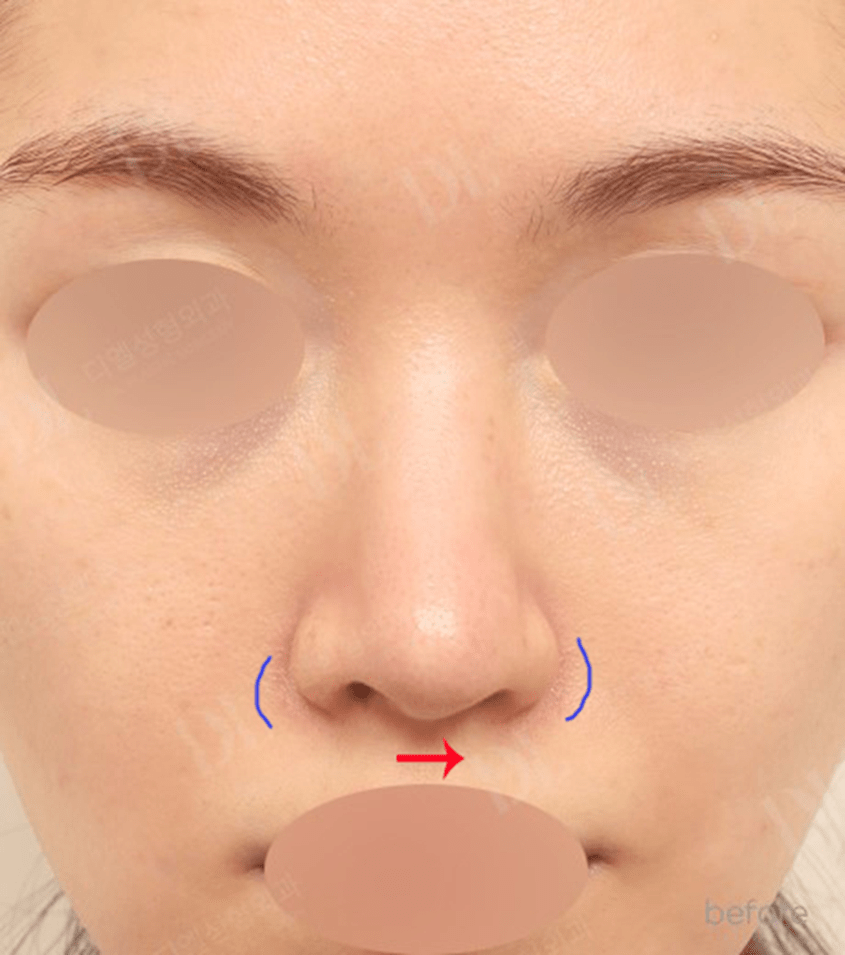
Preoperative frontal view demonstrating visible asymmetry of the nostrils and nasal axis. Patient images are shown with identity protection.
Why Can Asymmetric Nostrils Make the Whole Nose Look Crooked?
The two nostrils are shaped by several connected structures. A change in one component can alter the apparent height, width, or orientation of the opposite side. Common contributors include:
- Septal deviation: A bent or off-center septum can shift the central support of the nose and may also affect airflow.
- Columellar deviation: The columella – the tissue column between the nostrils – may tilt or twist, making one nostril look larger or higher.
- Lower lateral cartilage imbalance: Differences in the position, strength, or shape of the tip cartilages can distort the nostril rims.
- Alar rim or alar base asymmetry: The outer nostril margins or their attachment to the face may sit at different levels.
- A crooked nasal bridge: Bone and cartilage along the dorsum may deviate from the facial midline.
- Scar tissue or support loss after prior rhinoplasty: Revision cases may combine pre-existing asymmetry with postoperative contracture or weakened cartilage.
When Should Revision Rhinoplasty Be Considered?
A second or third rhinoplasty may be considered when visible asymmetry remains after a previous procedure and the concern is stable enough for a surgeon to assess. Reasons for consultation may include:
- A clear difference in nostril size, shape, height, or angle in frontal and base views.
- A nasal bridge or tip that visibly leans to one side.
- A twisted columella or uneven alar rims.
- Persistent nasal obstruction associated with septal deviation or nasal valve problems.
- A result that cannot be addressed safely by adding height alone.
The goal of consultation is not to select a procedure from a photograph. It is to identify which structures are producing the visible imbalance and whether surgery can improve them without compromising breathing or support.
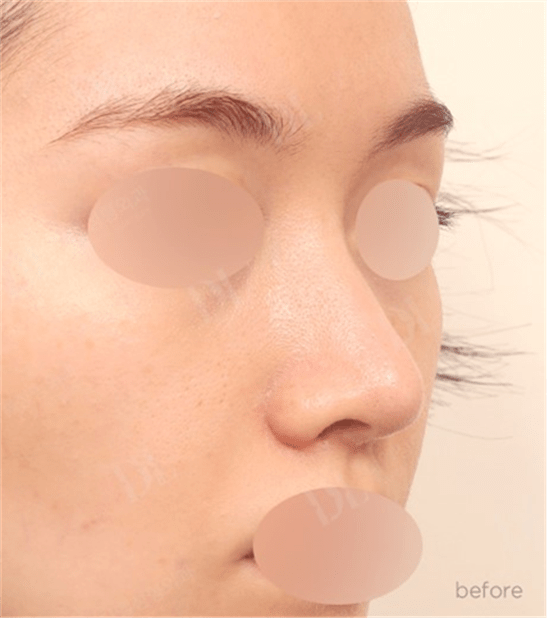
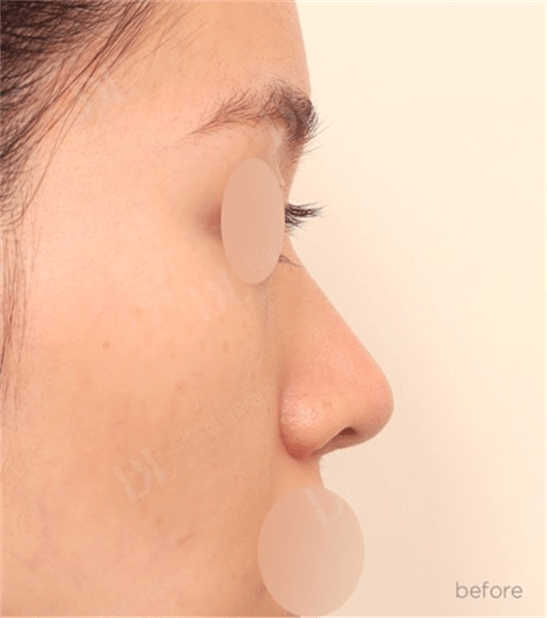
Preoperative oblique and lateral views help evaluate the bridge, tip projection, columella, and alar contour from multiple angles.
How Is the Cause of Nostril Asymmetry Evaluated?
A comprehensive assessment typically includes standardized photographs, comparison with the facial midline, an external and intranasal examination, evaluation of the septum and nasal valves, and a review of any prior operative records. Nasal endoscopy or CT imaging may be added when clinically indicated.
Important imaging note: 3D-CT can be helpful in selected cases, especially when bony deviation, sinus disease, trauma, or complex revision anatomy is suspected. It is not automatically required for every patient with uneven nostrils. The responsible surgeon should choose imaging according to the individual’s symptoms and examination findings.
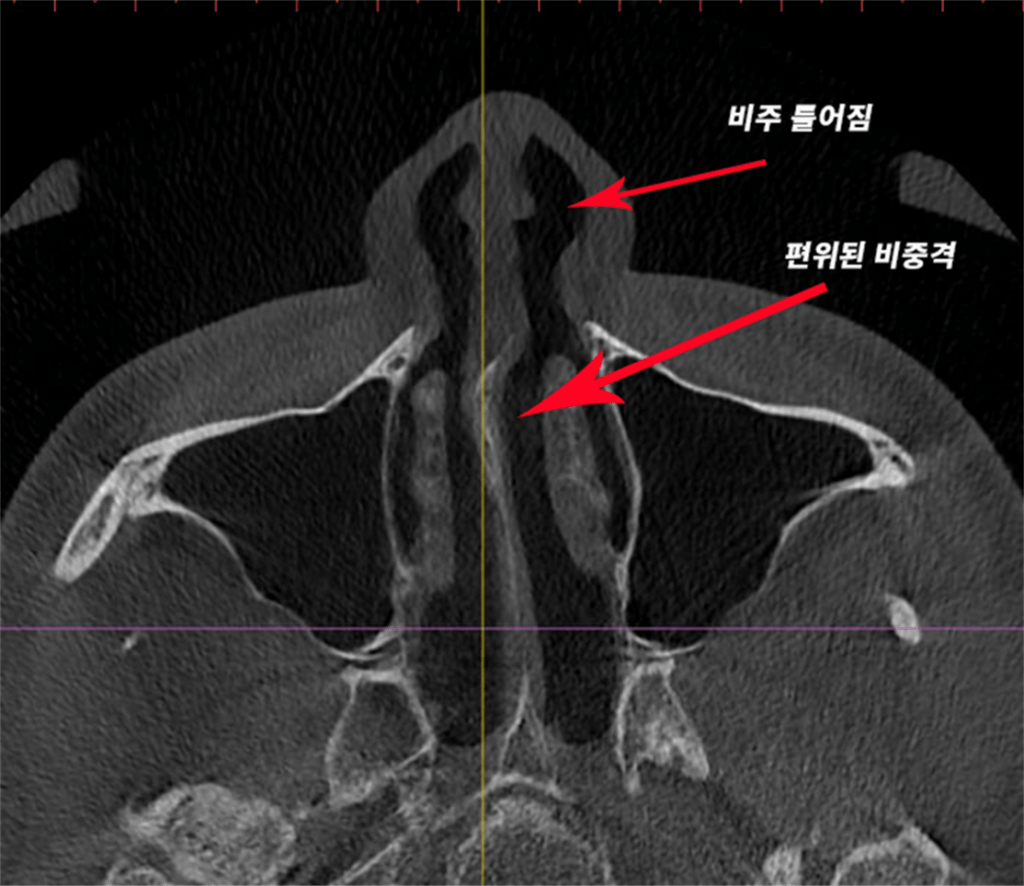
Axial CT example showing a deviated septum and a shifted columellar axis. CT is used selectively when it adds clinically useful information.
A Structure-by-Structure Surgical Strategy
In a crooked nose with asymmetric nostrils, treating only the visible nostril edge may leave the main deviation uncorrected. Conversely, straightening the septum without evaluating the tip and alar rims may leave residual asymmetry. A staged structural analysis generally follows this sequence: septum -> central axis -> tip and columella -> alar cartilages -> nostril margins and base.
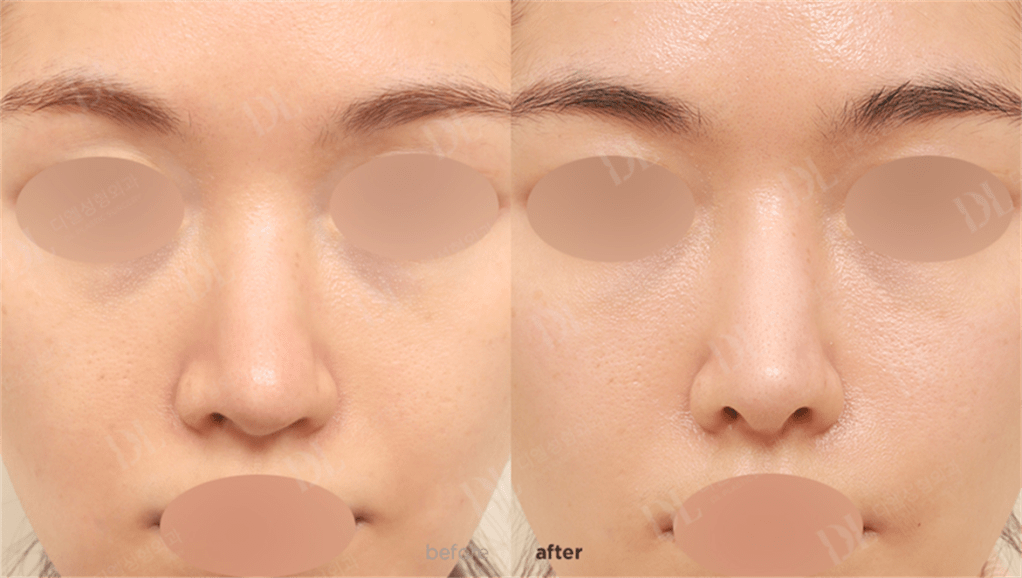
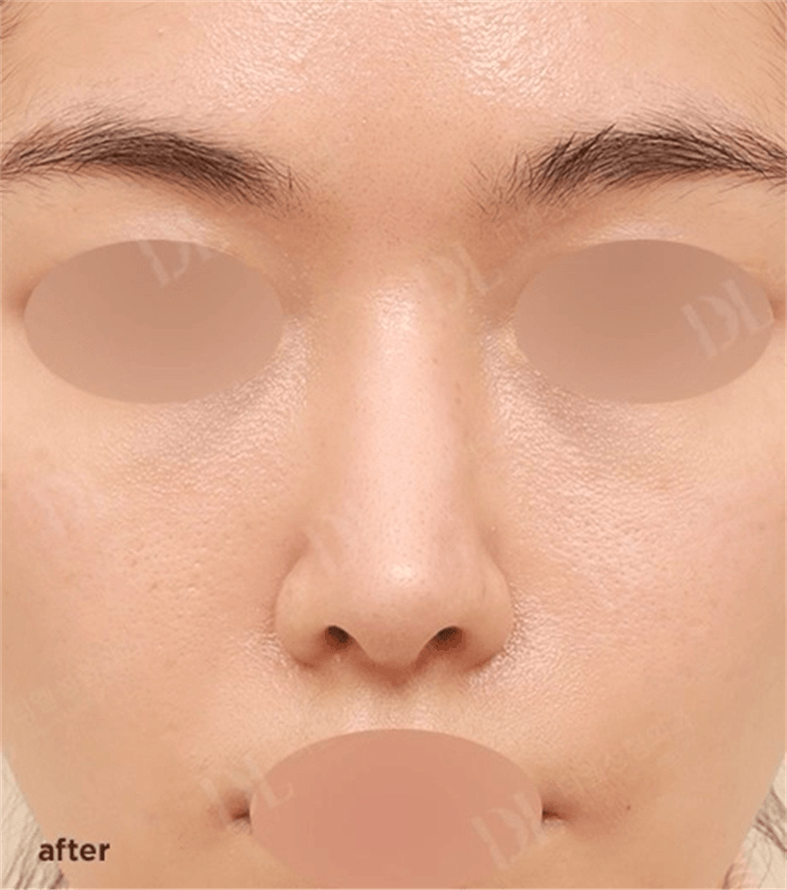
Frontal comparison illustrating improvement in nasal alignment and nostril balance after a patient-specific structural approach. Individual results vary.
Step 1: Correct the Deviated Septum and Central Support
The septum acts as a central supporting wall. When its caudal or dorsal portion is displaced, it can pull the columella and tip away from the midline. Septal straightening, repositioning, scoring, suturing, or graft support may be considered according to the pattern of deviation. Septoplasty can also address functional obstruction when appropriate.
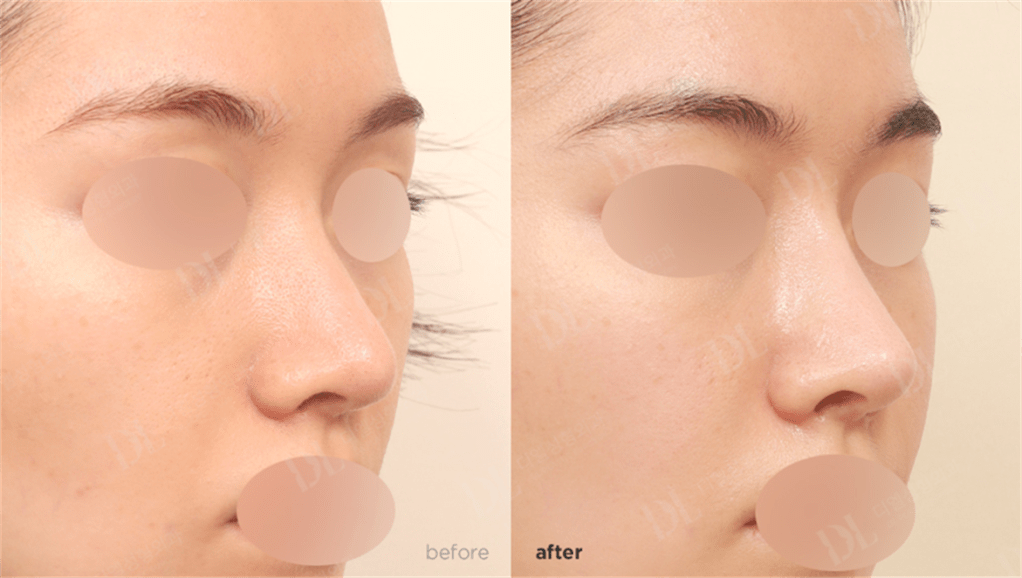
Oblique comparison used to assess changes in the bridge, tip support, and alar contour. Individual results vary.
Step 2: Rebuild Tip and Columellar Support
After the central framework is stabilized, the surgeon evaluates whether the tip and columella remain twisted or weak. Autologous cartilage – commonly septal or ear cartilage and, in selected revision cases, rib cartilage – may be used to create support. The exact graft and technique depend on available tissue, scar burden, skin thickness, and the degree of asymmetry.
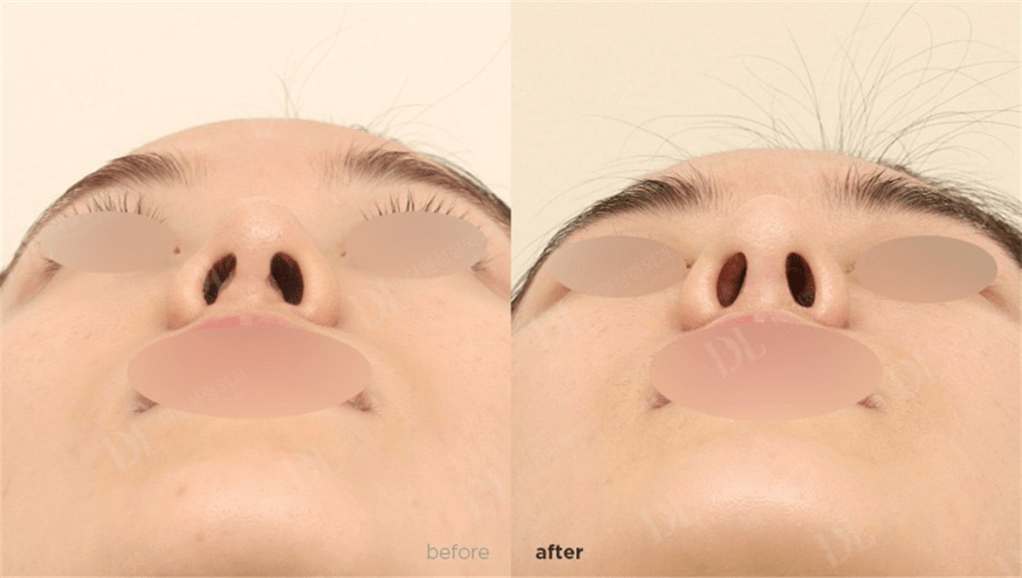
Base-view comparison showing the nostril shape and columellar position. Perfect mirror-image symmetry cannot be guaranteed.
Step 3: Realign the Crooked Bridge
If the nasal bones or upper cartilaginous vault are deviated, crooked nose correction may require osteotomies, controlled repositioning, spreader grafts, sutures, or other structural techniques. The aim is to bring the visible bridge and tip closer to the facial midline while preserving or improving the airway.
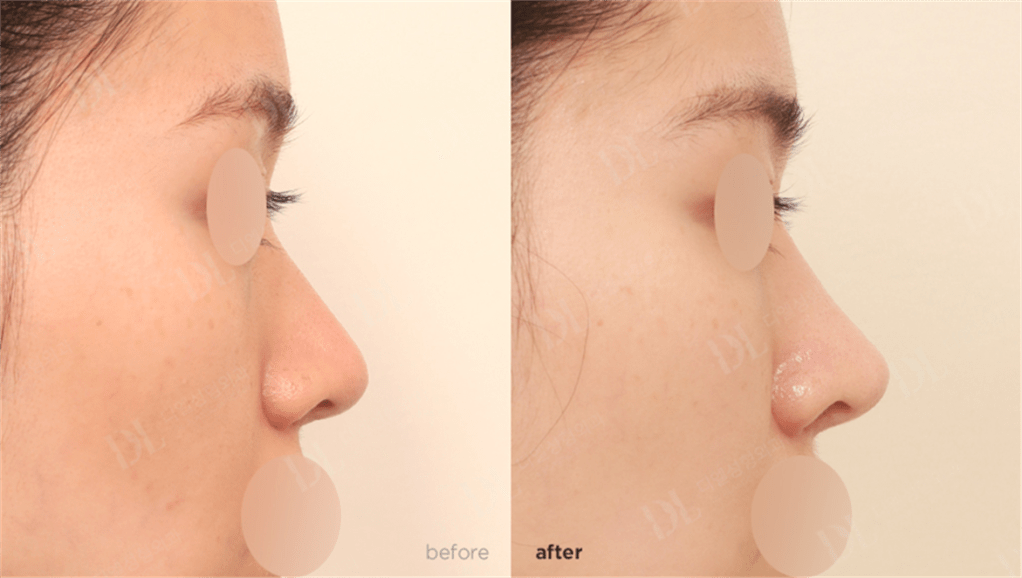
Lateral comparison used to evaluate profile continuity and tip position. Individual results vary.
Step 4: Refine the Alar Rims, Base, and Nostril Sill When Needed
Direct alar or nostril-base correction is not necessary in every case. It may be considered when a true alar height difference, rim retraction, excessive flare, nostril sill discrepancy, or scar-related distortion remains after the central framework and tip are addressed. Over-resection can be difficult to reverse, so conservative planning is important.
Does Every Uneven Nostril Need Alar Surgery?
No. A nostril can look larger because the tip is rotated, the columella is displaced, or the septum and nasal axis are shifted. In these situations, operating only on the alar base may not correct the underlying cause and can create a new imbalance. The nostril rim, nasal tip, columella, septum, bridge, and facial midline should be evaluated together before choosing the procedure.
Can Surgery Create Perfectly Symmetrical Nostrils?
No surgeon can guarantee perfect symmetry. The asymmetric crooked nose is one of the more complex rhinoplasty problems because the right and left sides may differ at multiple levels and the face itself is rarely perfectly symmetrical. A realistic goal is meaningful improvement in balance, alignment, support, and – when affected – nasal airflow.
Frequently Asked Questions(FAQ)
Can a deviated septum cause uneven nostrils?
Yes. A caudal or dorsal septal deviation can shift the columella, tip, and central nasal axis, which may contribute to visible nostril asymmetry. Other cartilage or alar differences may also be involved.
Will septoplasty alone correct visible nostril asymmetry?
Sometimes it helps, but not always. Septoplasty straightens the internal septum; visible asymmetry may also require rhinoplasty techniques for the bridge, tip, columella, alar rims, or nasal base.
Is 3D-CT required before nostril asymmetry correction?
No. CT is optional and should be selected when the clinical examination, symptoms, prior trauma, sinus concerns, or complex revision anatomy make it useful.
What cartilage is used in revision rhinoplasty?
Depending on the case, a surgeon may use remaining septal cartilage, ear cartilage, or rib cartilage. The choice depends on the amount and strength of support required and what tissue remains available.
Can alar base surgery alone fix asymmetric nostrils?
Only when the principal problem is truly located at the alar base or nostril sill. If the septum, tip, or columella is displaced, those structures may need to be addressed first.
What should I ask during a revision rhinoplasty consultation?
Ask which structures are causing the asymmetry, how breathing will be evaluated, what graft material may be needed, what degree of improvement is realistic, and what risks are specific to your prior surgery and scar tissue.
Key Takeaway
When asymmetric nostrils appear together with a crooked nose or deviated septum, the most reliable plan begins with the cause – not the nostril outline alone. Evaluating the septum, nasal axis, tip, columella, alar cartilages, and nostril base as one connected framework can help determine whether revision rhinoplasty may improve overall balance.
For patients researching nostril asymmetry correction or revision rhinoplasty in Seoul, choose a consultation that includes both aesthetic analysis and nasal airway assessment. The final plan should be individualized, conservative, and based on realistic expectations.
Medical disclaimer: This article is for general education and does not replace an in-person diagnosis. Surgical suitability, technique, risks, recovery, and outcomes vary according to anatomy, prior procedures, scar tissue, symptoms, and clinical findings.
Medical References
- Correction of the deviated tip and columella in crooked nose (PubMed)
- Rhinoplasty: The Asymmetric Crooked Nose – An Overview (PubMed)
- Surgical considerations in secondary rhinoplasty for correction of an asymmetric nostril (PubMed)
- Septoplasty – American Society of Plastic Surgeons
Clinical Indicators: Septoplasty – American Academy of Otolaryngology-Head and Neck Surgery

