
Rhinoplasty is a surgery that alters the central part of the face, so many people consider revision surgery when the results of the initial procedure are unsatisfactory or when deformities develop over time. This is especially true for those who have already undergone multiple surgeries or have significant structural damage to the nose, as it may be difficult to achieve the desired stability and shape using only standard implants or cartilage. In these cases, autologous rib cartilage revision rhinoplasty is the solution. Autologous rib cartilage, which is harvested from the patient’s rib, has sufficient strength and quantity, making it a commonly used material in complex revision rhinoplasty.
| When is Autologous Rib Cartilage Used in Revision Rhinoplasty?
There are several reasons why revision rhinoplasty may be necessary.
First, the initial surgery may not have achieved the desired height or shape. For example, the nasal tip may still appear blunt or upturned, or the nasal bridge may look too low. Second, over time, implants may become visible or shift in position, leading to asymmetry of the nose. Third, functional issues such as nasal obstruction may arise, requiring a reconstructive approach.
Both aesthetic and functional issues are key factors that make people consider revision surgery, and especially in more complex cases, autologous rib cartilage revision rhinoplasty is often considered.
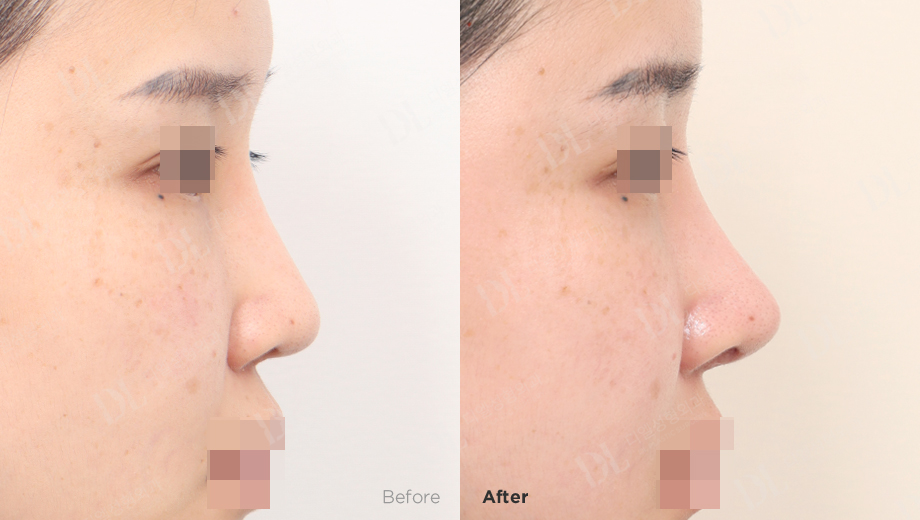
The patient had already undergone two rhinoplasty surgeries before visiting our clinic. The first surgery was performed four years ago, resulting in a nasal bridge that was too high and crooked, with a sensation of nasal congestion. Because of this, a revision surgery was performed a year later. However, this led to the nose becoming longer and the columella protruding, requiring columella correction. Unfortunately, six months later, inflammation occurred in both the columella and septum, which led to removal surgery. When the patient visited our clinic for a third revision, they requested a higher nasal tip and a more elegant line. For this, we recommended autologous rib cartilage, as it provides stable and sufficient support.
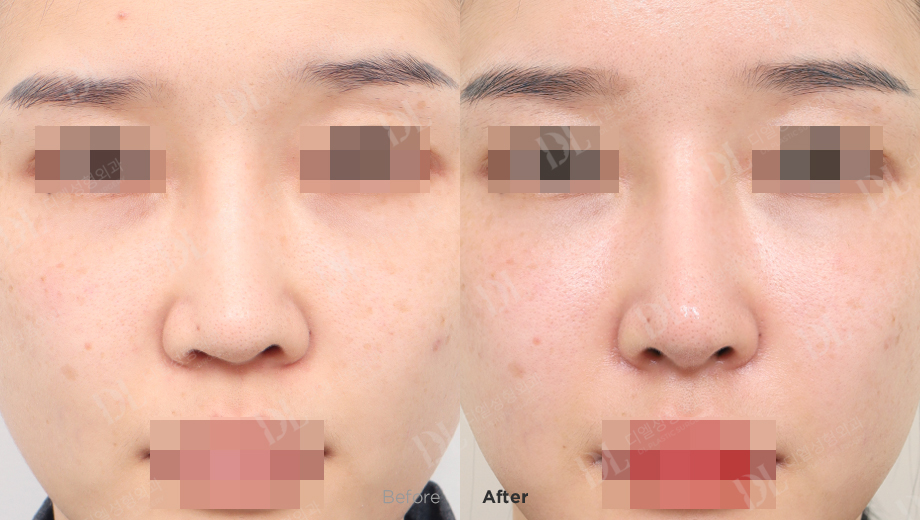
There is a clear reason why autologous rib cartilage is preferred in revision surgeries. In many cases, the septal or ear cartilage used in the first surgery has already been consumed, and strong support is needed to stabilize the altered nasal structure. Autologous rib cartilage is straight and firm, making it ideal for creating supporting structures. Furthermore, it can be used in ample quantities, making it ideal for complex reconstructions. Therefore, the more difficult the revision surgery, the more likely autologous rib cartilage is chosen.
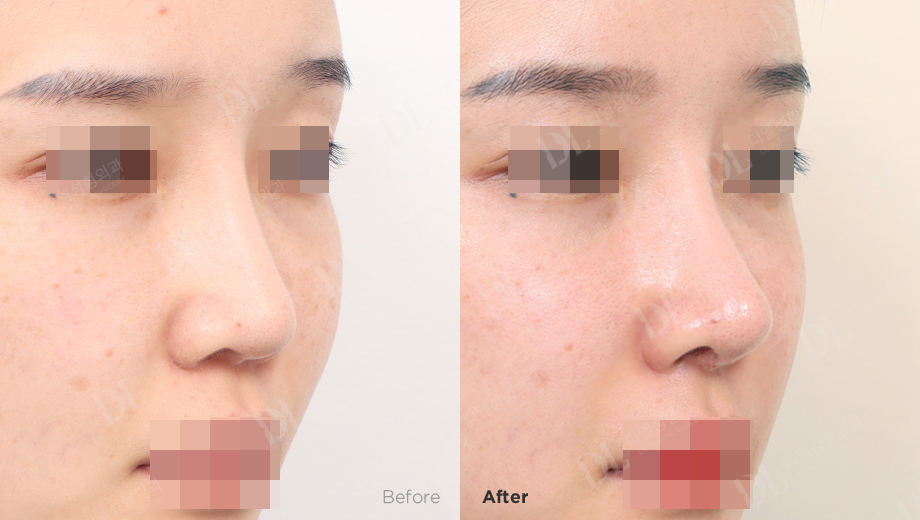
Cases where autologous rib cartilage revision rhinoplasty is necessary include:
- An upturned nasal tip causing a shortened columella
- Severe nasal deviation or asymmetry
- Thin skin due to previous implants, leading to distortion
- Nasal obstruction requiring functional reconstruction
Additionally, for patients who have undergone multiple surgeries and lost much of their internal cartilage, autologous rib cartilage is far more stable than other alternatives. In these cases, revision with autologous rib cartilage can not only improve aesthetics but also restore function.
| Advantages and Disadvantages of Autologous Rib Cartilage Revision Rhinoplasty
There are several advantages to using autologous rib cartilage in revision rhinoplasty. First, it allows for ample volume to be used without limitations. Second, it has excellent strength and support, enabling the creation of the desired shape with stability. Third, because it is the patient’s own tissue, the risk of immune rejection or infection is very low. Fourth, it has excellent long-term retention, enhancing the stability of the revision. In particular, it creates a natural shape even in cases where the skin is thin and implants tend to show through.
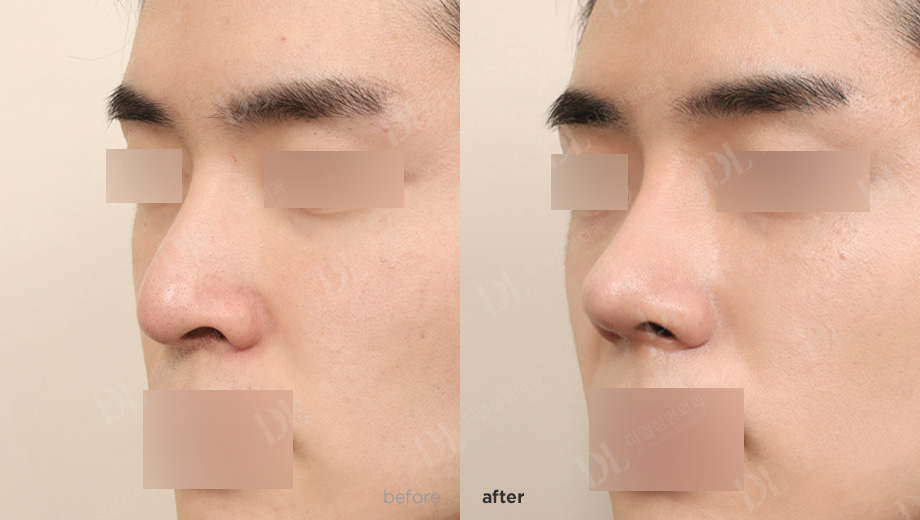
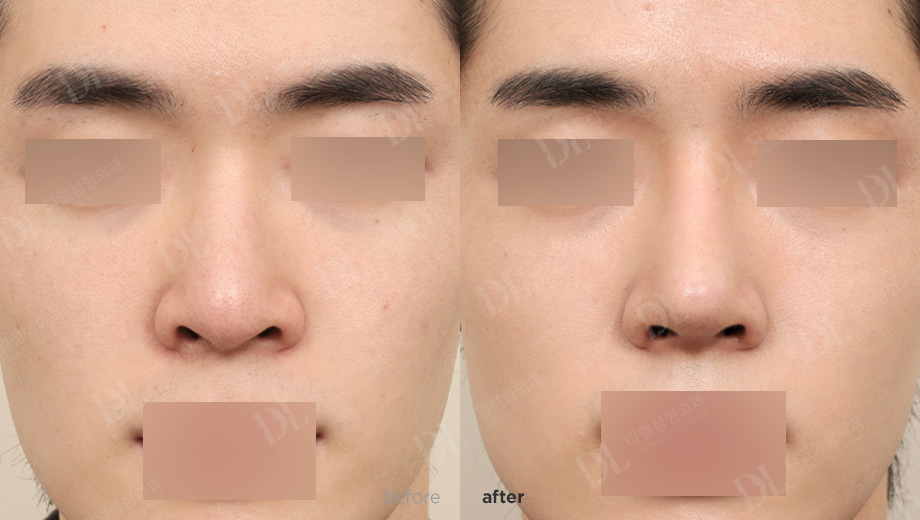
This male patient wanted to improve a drooping nasal tip. He mentioned that the tip had become wider compared to before the surgery, and especially in the last 8 months, the tip had lowered significantly. Additionally, when his condition was poor, he experienced pain and swelling. As he had used donor rib cartilage previously, he felt it wasn’t suitable for him, and thus he concluded that autologous rib cartilage was needed to rebuild a stable structure from the base. We planned to elevate the tip, lower the nostrils for symmetry, raise the starting point of the nasal bridge slightly to create a straight line, and also recommended alar base reduction to improve the bulbous appearance.
Of course, autologous rib cartilage revision rhinoplasty has some disadvantages. To harvest the cartilage, an incision is needed in the chest area, which can leave pain and scarring. Rarely, complications like pneumothorax can occur, and the procedure generally takes longer. Additionally, harvested rib cartilage has a tendency to warp, requiring a correction process during surgery. These issues need to be addressed by an experienced plastic surgeon to achieve stable results.
Since revision rhinoplasty is inherently more difficult than primary surgery, certain precautions are necessary. First, it is important to wait for sufficient recovery time before proceeding with the revision. Generally, a waiting period of at least 6 months is recommended, and in severe cases, up to a year. It is also important to have realistic expectations and understand that there may be limitations due to scarring and tissue damage.
In summary, autologous rib cartilage is a powerful material for revision rhinoplasty. It is essential for complex situations that cannot be resolved with other cartilage or implants, providing stable and natural results. While there is a burden from the harvesting process and the surgery is more complicated, the advantages far outweigh the disadvantages if performed by experienced medical professionals. If you have struggled with multiple surgeries or need clear structural correction, it is advisable to consult a specialist and consider autologous rib cartilage revision rhinoplasty.
 DL Plastic Surgery