
Facial contouring surgery is one of the most significant procedures for improving the overall shape and balance of the face.
It helps refine the bone structure of the jawline, cheekbones, and chin to create a more dimensional and harmonious appearance. However, if the initial surgery does not produce satisfactory results or leads to functional issues, revision surgery may be considered.
Since facial contouring involves significant psychological pressure for patients, the decision to undergo revision surgery can be even more difficult. If you are considering facial contouring revision surgery, it is important to first identify the reason the previous surgery failed, and then proceed with a method and timing that are best suited to you — to avoid needing another revision in the future.
| Facial Contouring Revision Surgery – These Are the Cases When It’s Performed
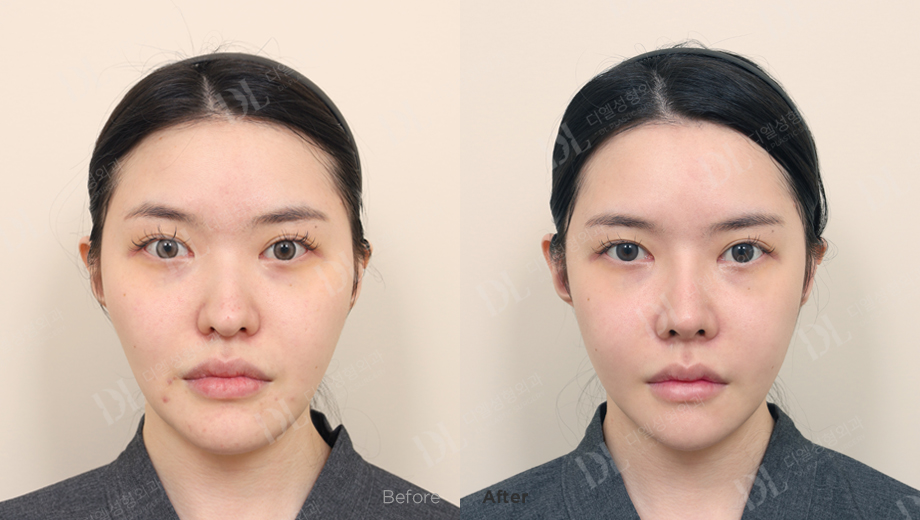
This patient had previously undergone facial contouring at another clinic but did not see a significant reduction in facial width.
One of the most common reasons for undergoing revision surgery is dissatisfaction with the aesthetic result. This can include cases where the outcome looks different from expectations, where facial asymmetry worsens, or when the face appears unnaturally small. Over time, issues like volume loss in the cheeks or a hollowed appearance due to aging may also occur.
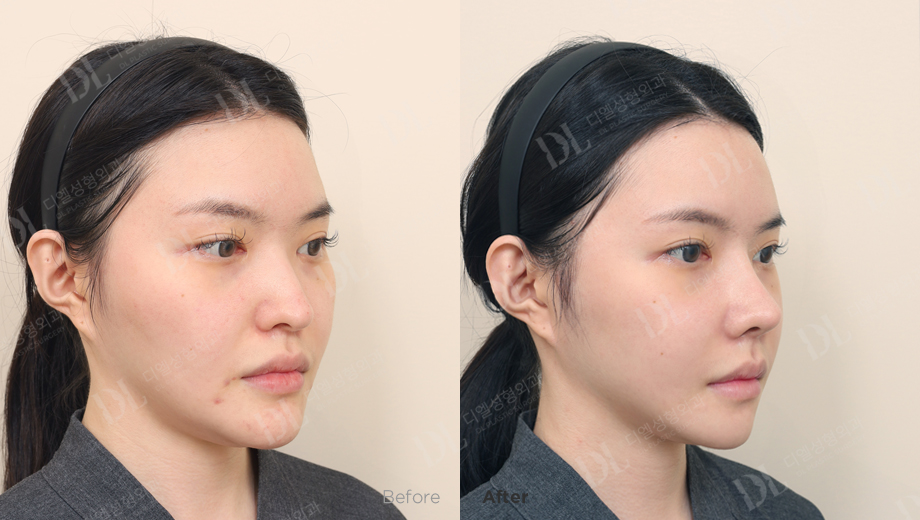
The patient shared that people still said her face looked wide and flat, and she wanted to reduce the width of her cheekbones. She also felt that her chin still gave off a protruding or underbite-like impression.
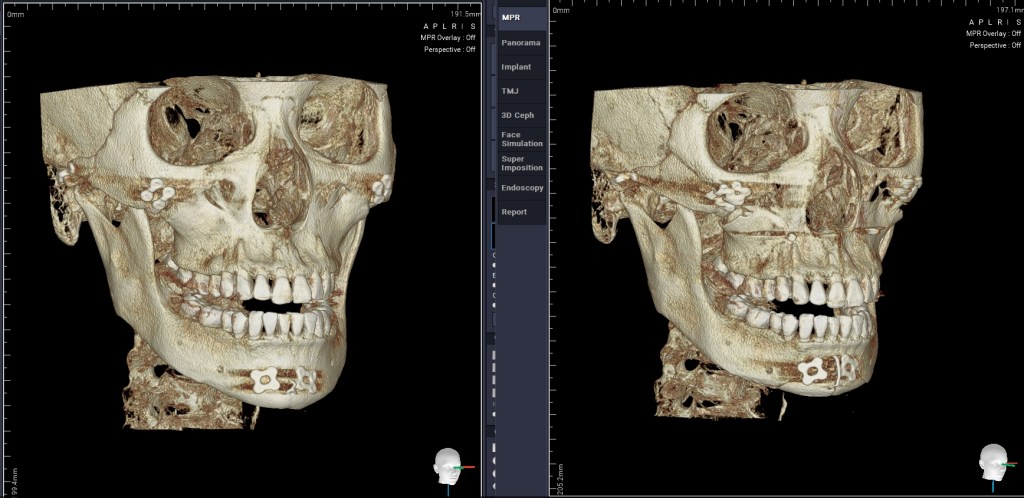
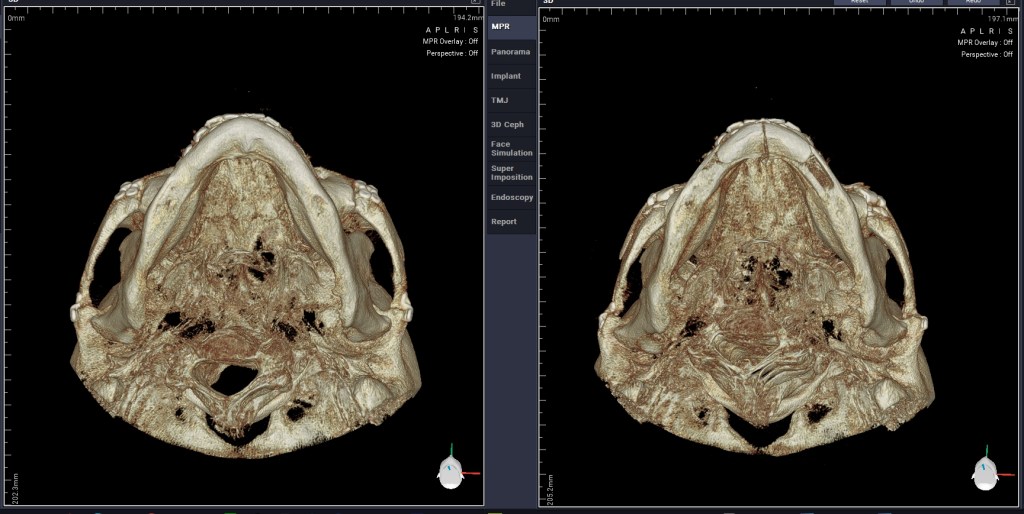
CT scans revealed that the bone around the 45-degree angle of the cheekbones had not been removed, nor had the bones been repositioned.
| Why Was Her Previous Cheekbone Surgery Ineffective?
The cheekbone is a three-dimensional structure that protrudes in the front, side, and upper directions. Therefore, simply “shaving” the bone is not enough to create proper volume and facial balance.
Front Cheekbone: The part that sticks out when viewed from the front
Side Cheekbone: The part that juts out and makes the face look wide in side view
45-Degree Cheekbone: The area between the outer corner of the eyes and the protruding cheekbone
Because the cheekbone protrudes in multiple directions, adjusting its position and orientation is more important than simply reducing it.
In this revision surgery, both bone removal and repositioning were performed. The most protruding parts of the cheekbone were reduced as much as possible. As for the chin, although not much bone could be removed, we were able to achieve a sufficient improvement by lifting and repositioning the surrounding soft tissue and muscles.
Next is another patient who underwent cheekbone and square jaw revision surgery.
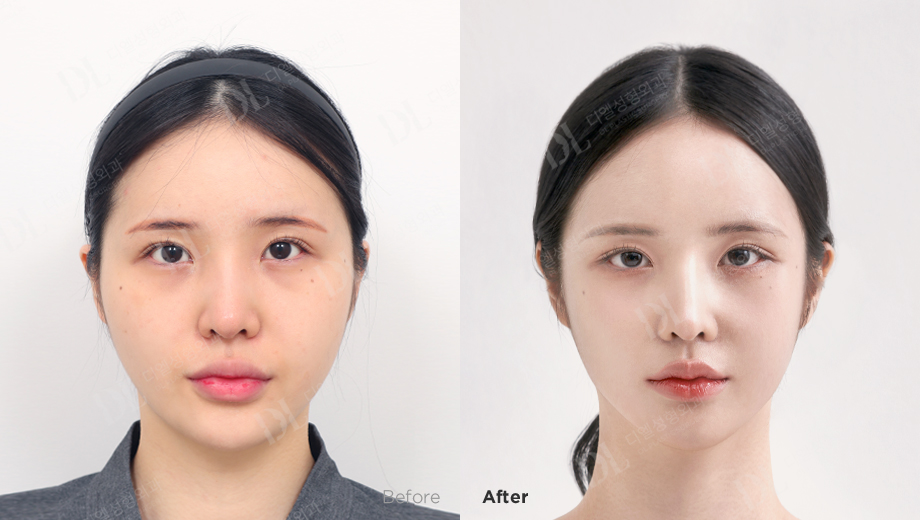
This patient also had facial contouring at another clinic but was not satisfied with the outcome.
She felt there was no improvement in the cheekbone area and asked us to reduce it as much as possible. However, in most cases, instead of simply shaving off a lot of bone, rotating or repositioning the cheekbone leads to more natural and three-dimensional results.
| Important Considerations Before Revision Surgery
Facial contouring revision surgery requires much more detailed and precise planning compared to the first surgery. Since the bone structure has already been altered, accurate CT imaging and thorough analysis are crucial. This helps determine the current condition of the remaining bones, whether further bone removal is possible, and the location of key nerves.
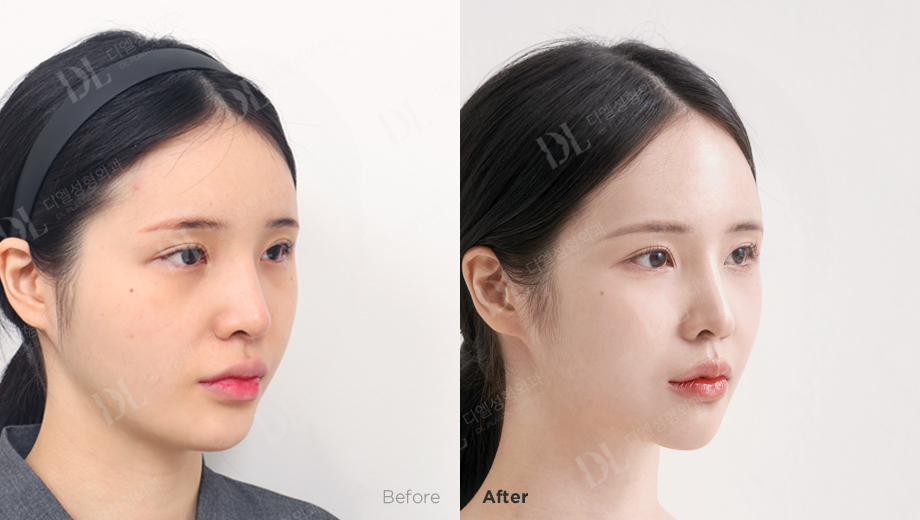
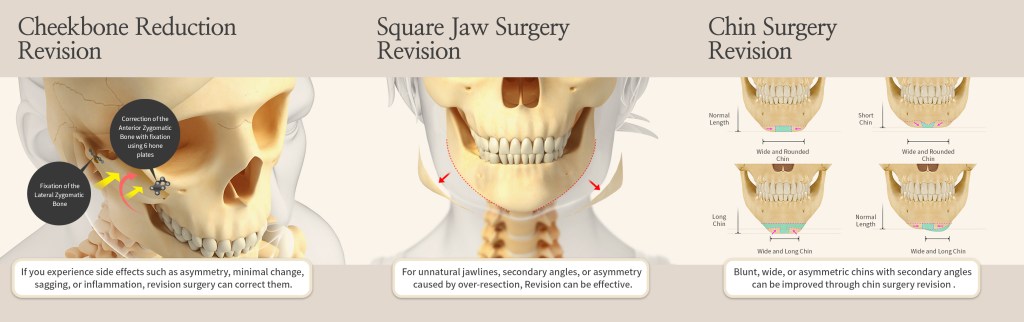
| Why Do Patients Undergo Square Jaw Revision Surgery?
Unnatural or overly reduced jawline:
If too much bone was removed or the angles were not connected smoothly, the jaw may appear crooked or artificial. In some cases, the area below the ears or along the jawline may appear sunken or aged due to over-resection or muscle atrophy.
Asymmetry:
If the amount of bone removed differs between sides or the jaw lengths are uneven, asymmetry will be more apparent in both front and side views.
Sharp cutting edges or unnatural feel:
If the bone edges are not smoothed properly or remain too angular, the jaw may feel sharp to the touch and look unnatural.
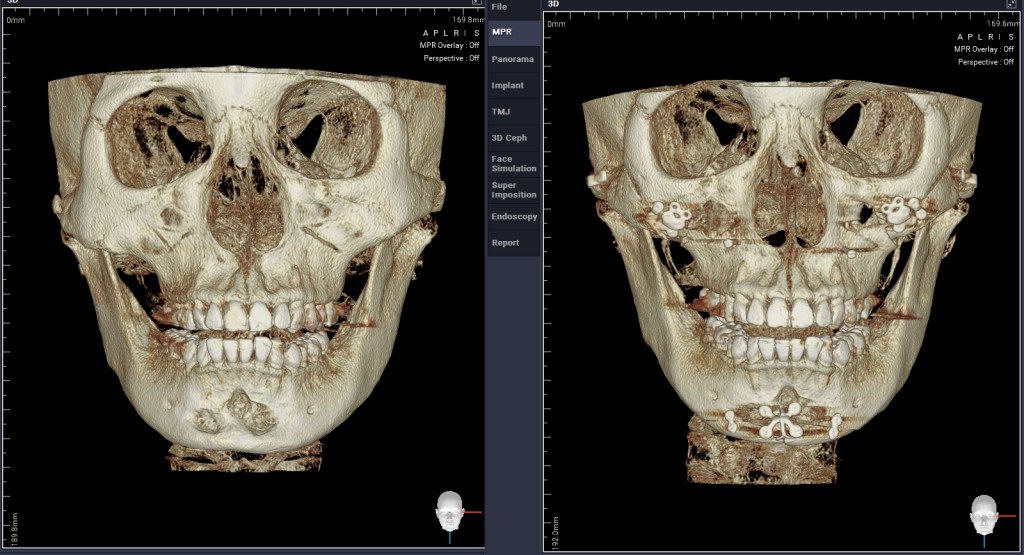
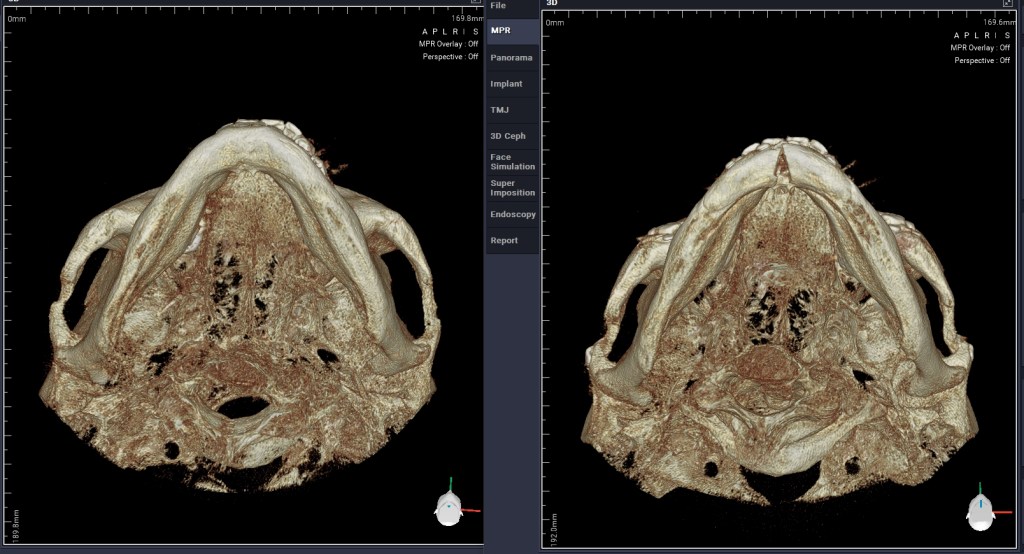
| Different Causes Require Different Surgical Approaches
In cases like this one where the problem was insufficient improvement, the solution is often additional bone cutting or reshaping.
If the initial surgery did not remove enough bone, further bone resection is required to reduce the width and soften the angles. Both the mandibular angle and the lower border of the jaw (inferior border) should be refined together to create a smooth and natural line.
In this case, the patient underwent cheekbone, square jaw, and chin surgery to achieve a slimmer and more refined facial shape.
| Proper Timing Is Crucial for Any Revision Surgery
It’s important not to rush into a revision before the body has fully recovered. In general, we recommend waiting at least 6 months after the first surgery so that swelling subsides, scar tissue settles, and the bone fully heals.
Of course, there are exceptions. If the patient experiences nerve damage, infection, or other urgent functional problems, earlier intervention may be necessary — in such cases, the surgeon’s judgment is critical.
 DL Plastic Surgery