
In the past, L-shaped silicone implants were commonly used in rhinoplasty procedures, as they could simultaneously augment both the nasal bridge and tip. However, these implants often created an unnatural appearance and exerted pressure on the nasal tip, leading to deformation over time.
Nowadays, L-shaped implants are rarely used, and many patients undergo revision rhinoplasty to replace or completely remove the implant—often opting for reconstruction using autologous rib cartilage.
|Revision Rhinoplasty Using Autologous Rib Cartilage After L-Shaped Silicone Removal
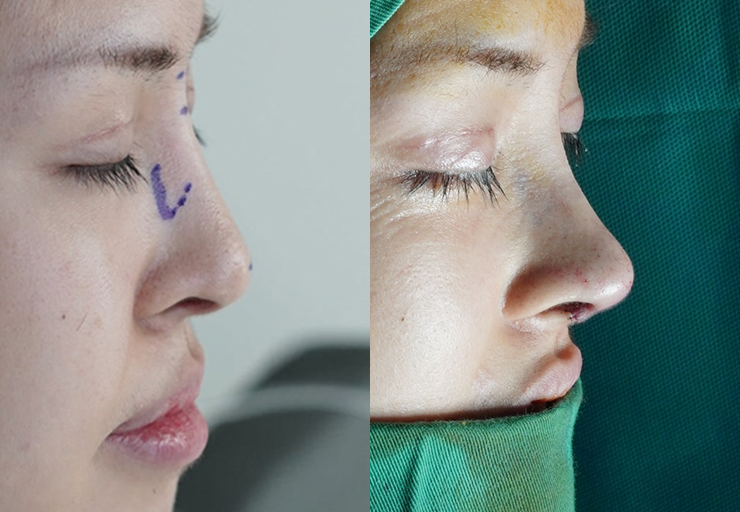
This patient had previously undergone surgery with an L-shaped implant.
As shown, the implant made the nasal bridge appear high and the nose look elongated, while the alar cartilages were compressed under the pressure of the silicone, leading to distortion.
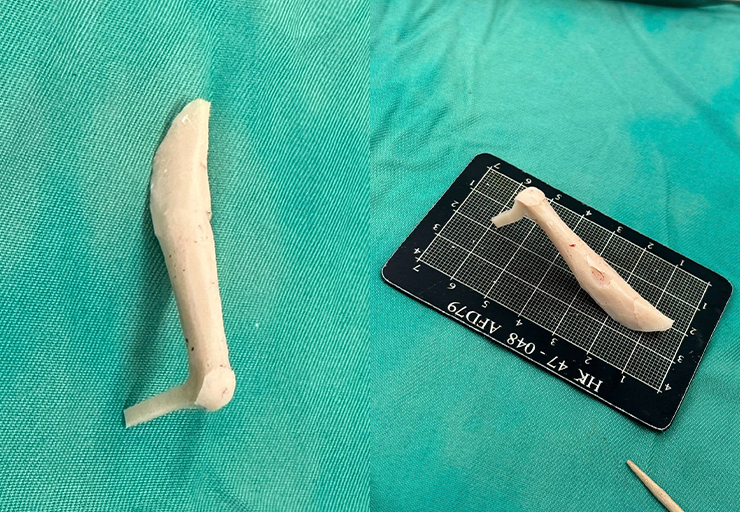
The L-shaped silicone implant offers the convenience of shaping the nasal bridge, tip, and columella in one piece, which simplifies the surgical procedure. However, it limits the surgeon’s ability to make fine adjustments to each area. Depending on the implant’s size, the nose may appear too short or too long, and if the columella is weak, it may bend or become crooked. Additionally, because the implant extends to the nasal tip, it frequently causes compression of the alar cartilages, which can lead to visible nostril deformities.
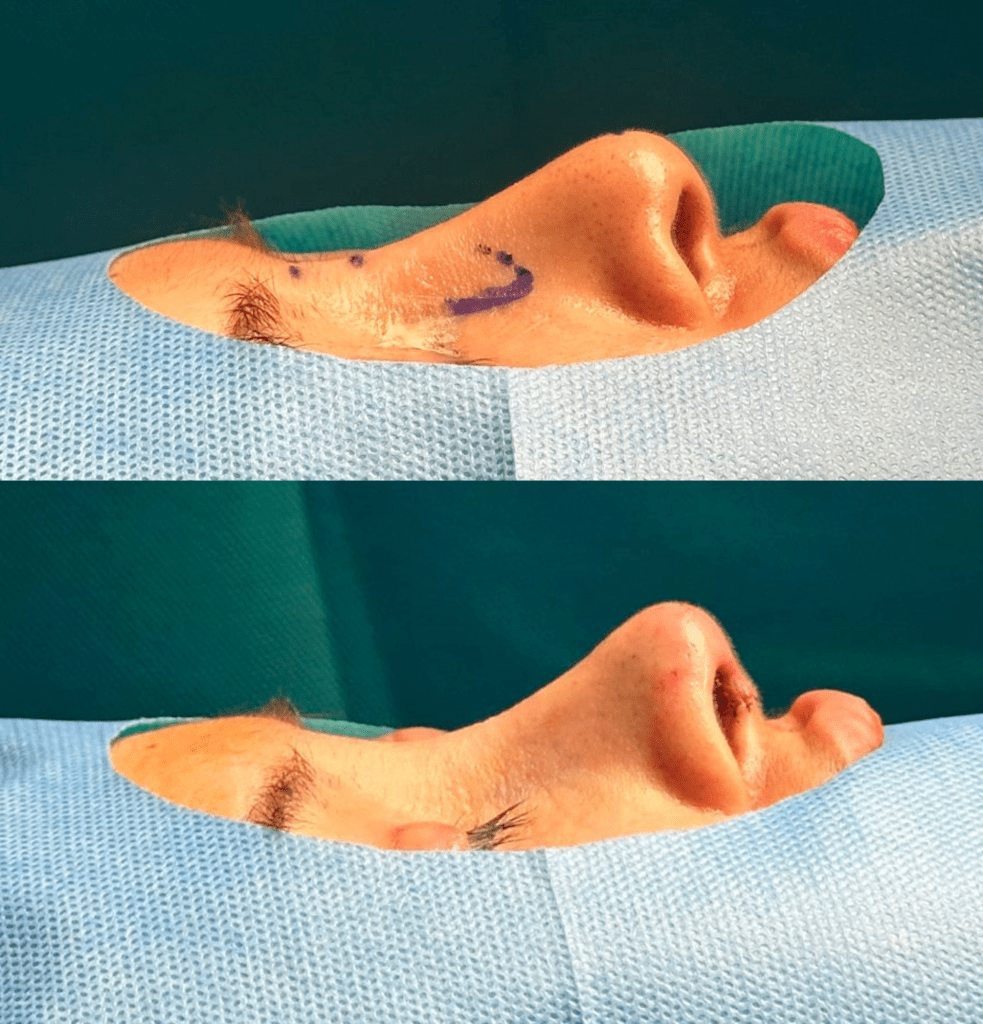
Sudden removal of the implant can cause a significant loss of nasal height, and often requires reconstruction of the columella and alar cartilages. This makes the revision procedure more complex.
When substantial structural support is needed, autologous rib cartilage is commonly used in revision rhinoplasty to provide the necessary volume and stability.
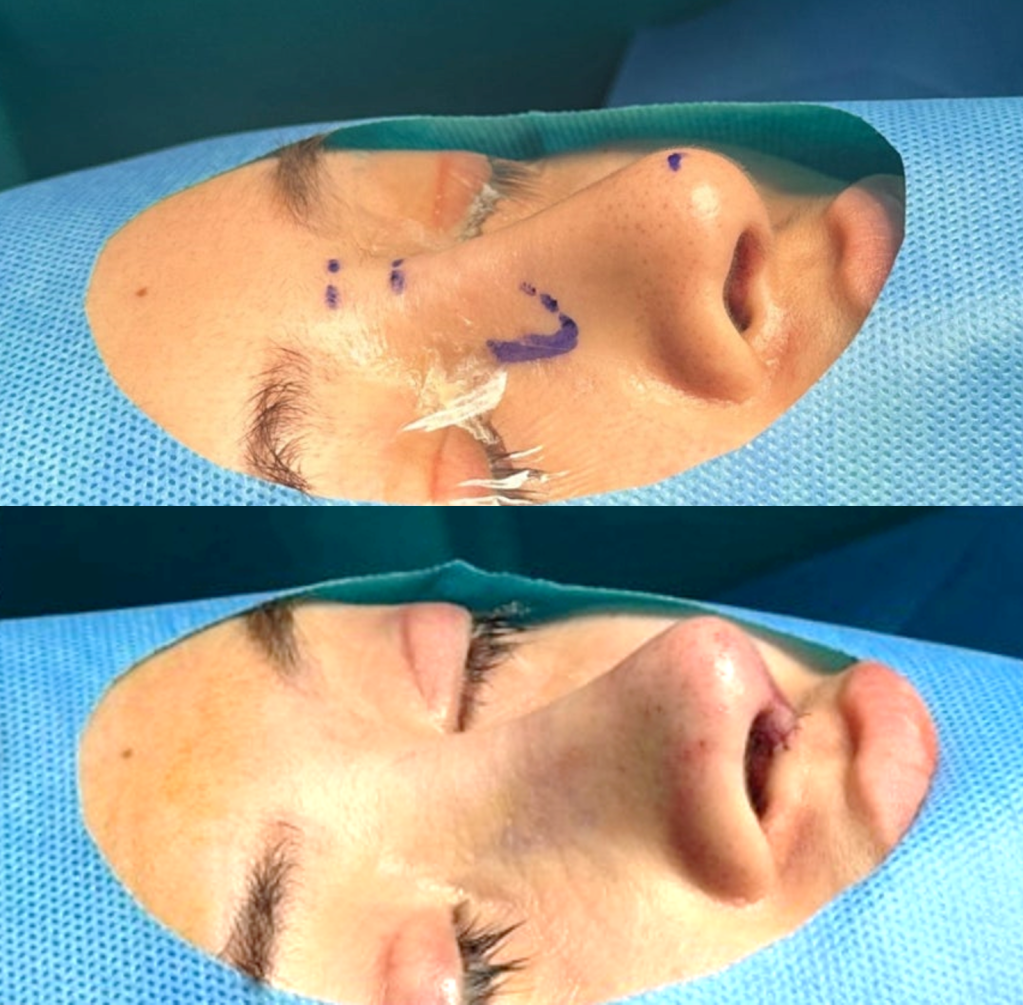
In this case, we used the patient’s own rib cartilage to reconstruct the columella and support the alar cartilages. The starting point of the nasal bridge was lowered, and the nasal tip was elevated to achieve a balanced and refined nasal contour that harmonizes well with the patient’s facial features.
 DL Plastic Surgery