
The reasons for seeking revision rhinoplasty vary from patient to patient,
but one of the most common cases we see at our clinic is revision surgery for contracted nose.
“Contracture” refers to inflammation caused by the implant, and today, we’d like to share a case involving both contracture and implant exposure through the nasal mucosa.
Revision Rhinoplasty for Contracted Nose & Exposed Implant Removal

This patient visited us with symptoms of nasal contracture and implant exposure inside the nose.
They reported that about six months ago, a pimple began forming on the nasal tip, eventually developing into inflammation.
Two months prior to visiting, pus began to ooze out, and the nose started appearing shorter and increasingly deformed.

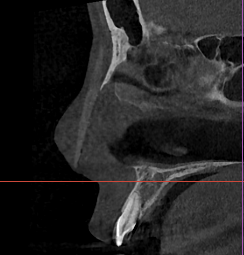
A scan revealed that the implant had indeed exposed through the nasal lining.
Active inflammation was present, along with typical signs of contracture.
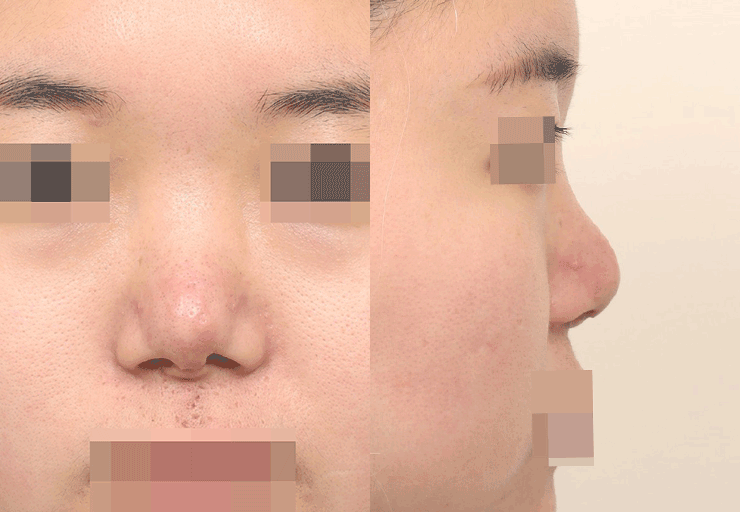
Given the current condition, our priority was to remove the exposed implant and control the inflammation.
To create a healthy environment for future revision, we performed a skin graft on the area where the nasal mucosa was deficient.
Dr. Jeong also harvested and used ear cartilage to reinforce the nasal alar cartilage, which had been absorbed, in order to prevent skin deformities.
After waiting 4–5 months for the inflammation to subside and the inner nose to stabilize, we proceeded with the revision surgery.

The reconstruction was performed using autologous rib cartilage.
Due to the overall contracture, Dr. Jeong released the hardened tissues.
The deformed septal cartilage and alar cartilage were also reconstructed using rib cartilage,
allowing us to extend the nasal length and restore the shape.
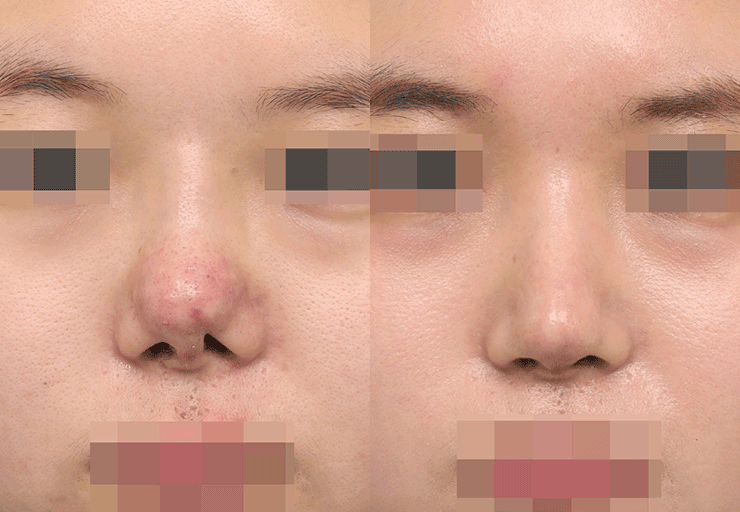
Infections and contracted nose cases cannot always be resolved with a single surgery.
It takes time to return to a healthy nose,
but going through each step safely using the patient’s own tissue is the most reliable method for achieving long-lasting, complication-free results.
 DL Plastic Surgery