
The patient presented with a history of undergoing revision surgery using donated cartilage five years ago to elevate the nasal tip. Over time, she experienced nasal tip drooping, prompting her visit to our clinic.
She recalled having bumped her nose several times post-surgery, after which she noticed a gradual lowering of the nasal tip. Upon consultation at our hospital, she was informed that the donated cartilage had likely fractured due to these impacts.
A CT scan revealed that a large piece of donated cartilage was inserted as a columellar strut, with signs of absorption and cracks appearing at the nasal tip.
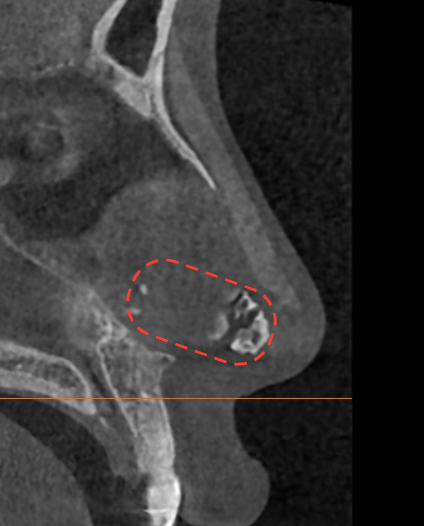
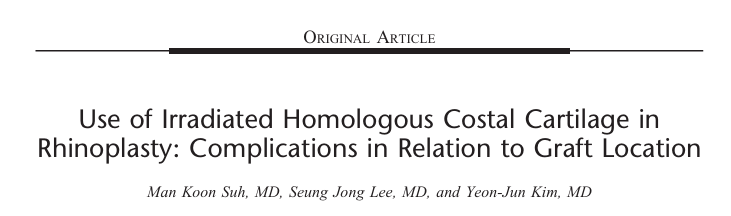
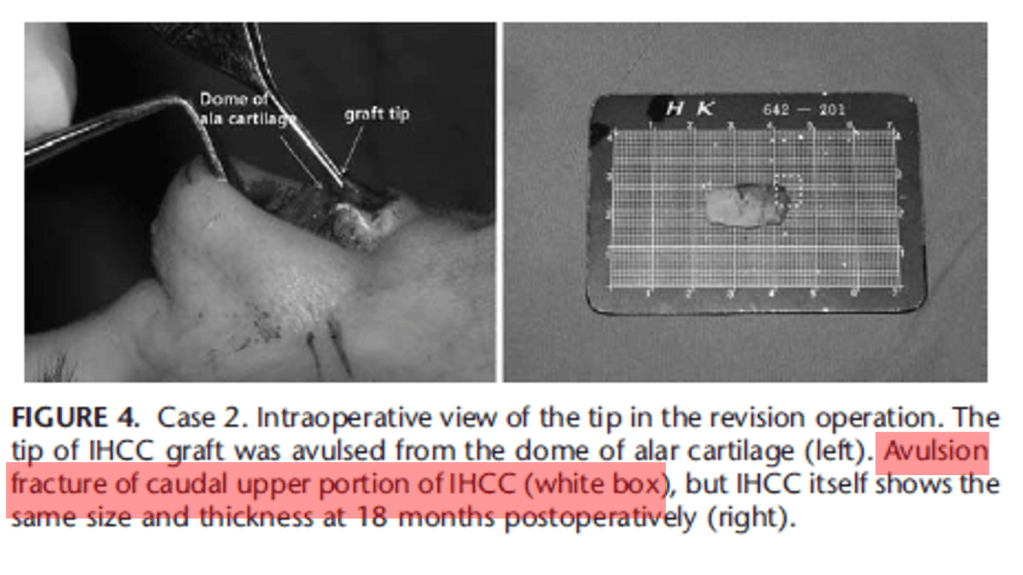
Dr. Suh (Man Koon Suh)’s research indicates that caution is needed when using donated cartilage in areas subject to stress and tension. As shown in the images:
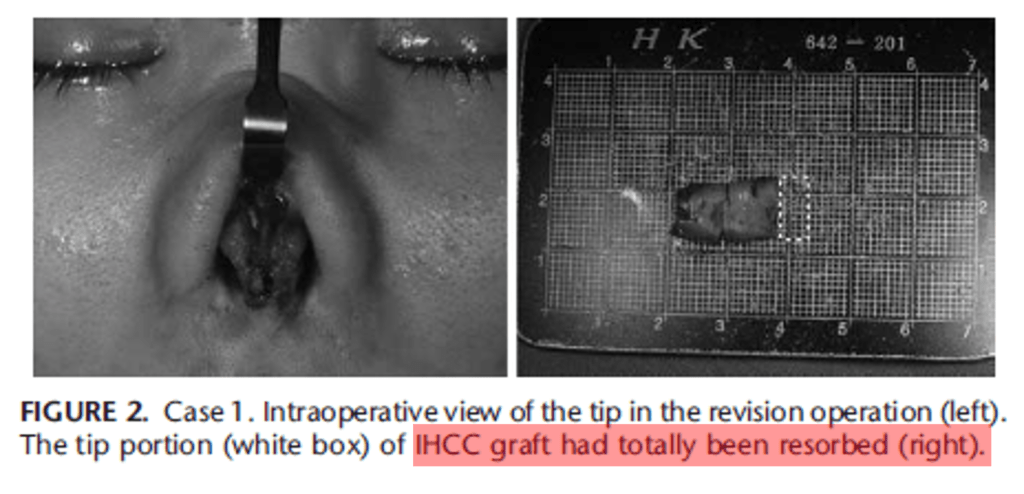
- (Left image) Absorption leading to disappearance at the nasal tip
- (Right image) Fracturing and weakening, resulting in decreased structural support
It appears that due to impacts and continuous pulling forces on the nasal tip, the donated cartilage likely fractured and gradually got absorbed, resulting in the lowering and drooping of the nasal tip over time.
The patient desired height and three-dimensional contour restoration of the nasal tip. Given the risk of absorption if donated cartilage were used again, we opted for autologous cartilage in the revision surgery.

Before
3 Weeks After
The procedure involved removing the implanted donated cartilage and constructing a robust columellar strut using autologous cartilage to elevate the nasal tip and achieve a defined profile.
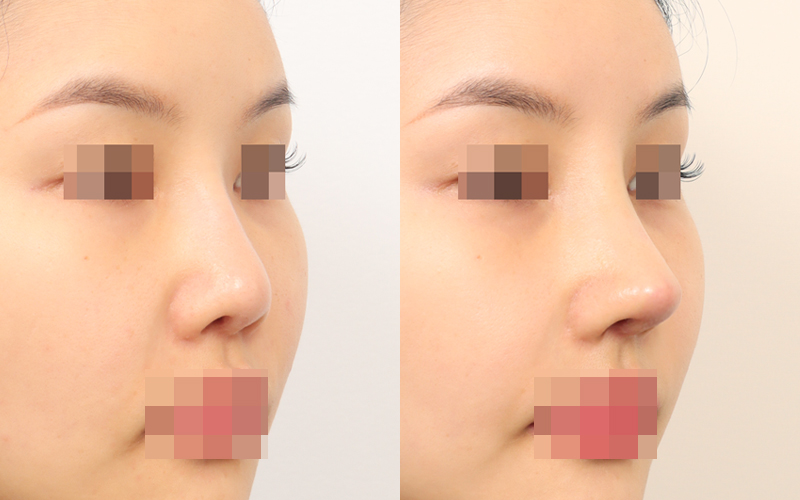
Before
3 Weeks After
The above photos depict the post-operative state about three weeks later, showing substantial reduction in swelling. Some redness persists due to skin tightening and the revision nature of the surgery, which is expected to resolve over time.
During surgery, we observed absorption of the donated cartilage at the nasal tip and structural weakening due to fracture.
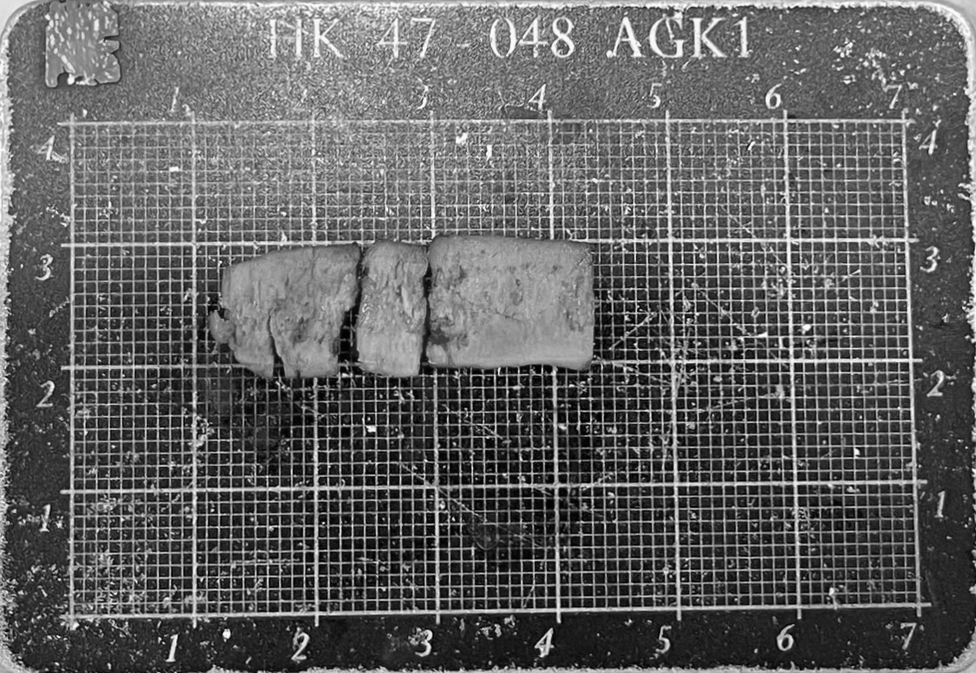
Autologous cartilage tends to exhibit less absorption over time compared to donated cartilage, suggesting that its use in revision surgeries requiring a sturdy framework may yield more stable long-term outcomes.
 DL Plastic Surgery